Lake Chicot fishing guide
Lake Chicot is a oxbow lake in Southeast Arkansas. Here is how it fishes through the year, where the fish live, and where to put in.
- Region
- Southeast Arkansas
- Water
- Oxbow lake
- Clarity
- Stained
- Fish it from
- Boat, Bank
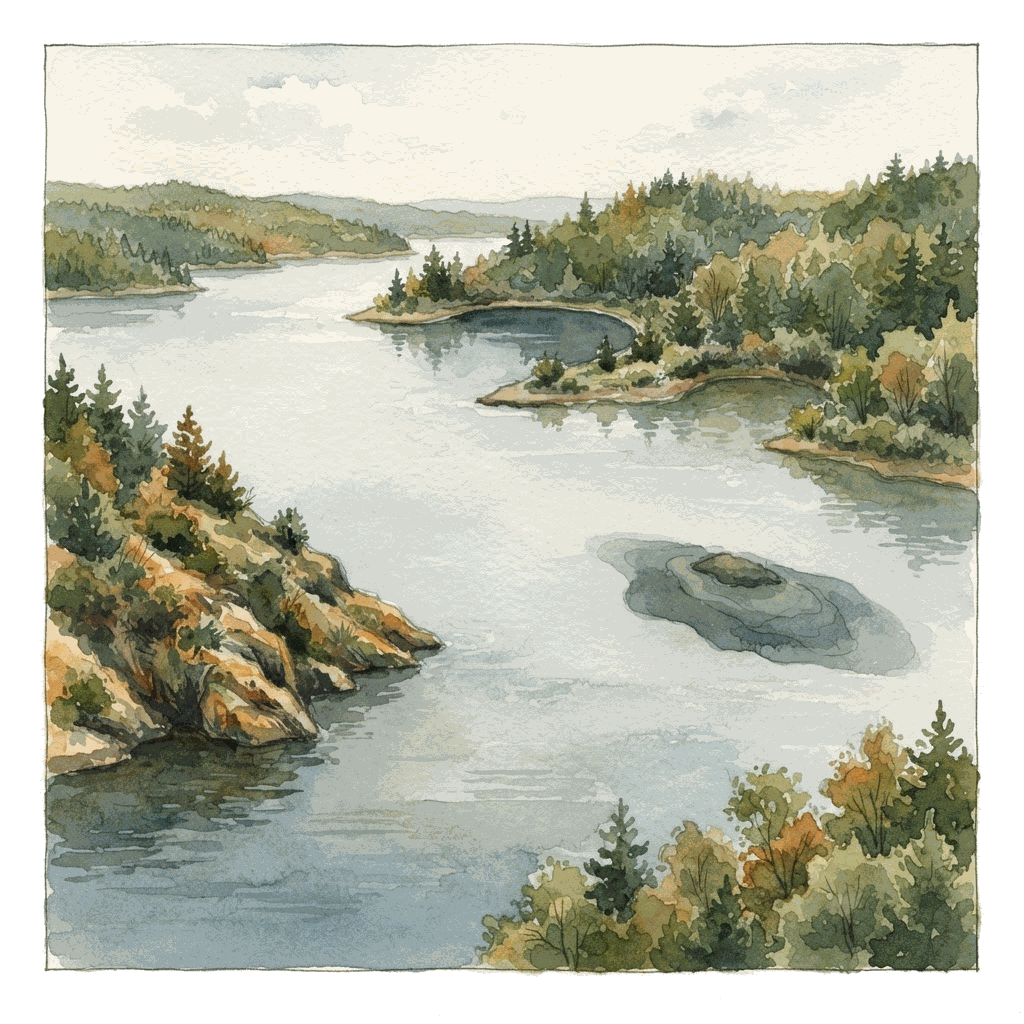
How Lake Chicot fishes
Arkansas's largest natural lake and the largest oxbow lake in North America, about 20 miles long beside Lake Village. Cypress, grass and laydowns are the cover that holds largemouth and crappie; there is no rock here.
What swims in it
- Largemouth bass
- Crappie
- Bluegill
- Redear sunfish (shellcracker)
- Channel catfish
- Hybrid striped bass
- Bream
Largemouth bass · backup: Crappie
This oxbow lake is rich and shallow with strong bass and panfish numbers; crappie are the backup for easy, high-count action.
Largemouth bass on Lake Chicot through the year
The general pattern for each part of the year. Your trip report narrows this to your date, the weather that week and the water level.
Pre-spawn
Bass are feeding up before moving shallow to spawn, so bigger reaction baits can work.
Where to look: Secondary points, creek-channel swings, transition banks, and the first structure outside spawning pockets.
Mood: Often aggressive, especially before fronts.
Spawn / post-spawn mix
The bite can feel confusing because not all fish are doing the same thing at once.
Where to look: Protected pockets, gravel, dock shade, fry-guarding cover, and first breaks outside spawning areas.
Mood: Inconsistent: some fish guard shallow, some recover, and some chase shad.
Summer pattern
Bass split between two paths: deep structure near the thermocline, and shallow cover that still holds oxygen, shade, and forage. Healthy grass, pads, moss, shaded docks, laydowns, wind-blown edges, and current can keep fish shallow even in hot water. Dead or dying vegetation is a warning sign, not a positive.
Where to look: Deep path: main-lake points, brush, ledges, standing timber, and deep dock shade. Shallow oxygen/shade path: healthy grass edges and mats, pads, moss, shaded docks, laydowns, wind-blown cover, and current or inflows with nearby depth.
Mood: Short feeding windows with better bites early, late, or around bait — plus a shallow bite that stays on all day where cover holds oxygen and shade.
Fall transition
Bass follow bait, so the best area can change quickly from main lake to pockets and creek arms.
Where to look: Creek mouths, wind-blown pockets, bait balls, shallow flats near deep water, and transition banks.
Mood: Can be aggressive but scattered.
Winter pattern
Fish feed less often, but they group up around stable deep structure and warmer windows.
Where to look: Bluffs, deep timber, channel swings, vertical rock, and slow current breaks.
Mood: Low but predictable.
Where fish hold on Lake Chicot
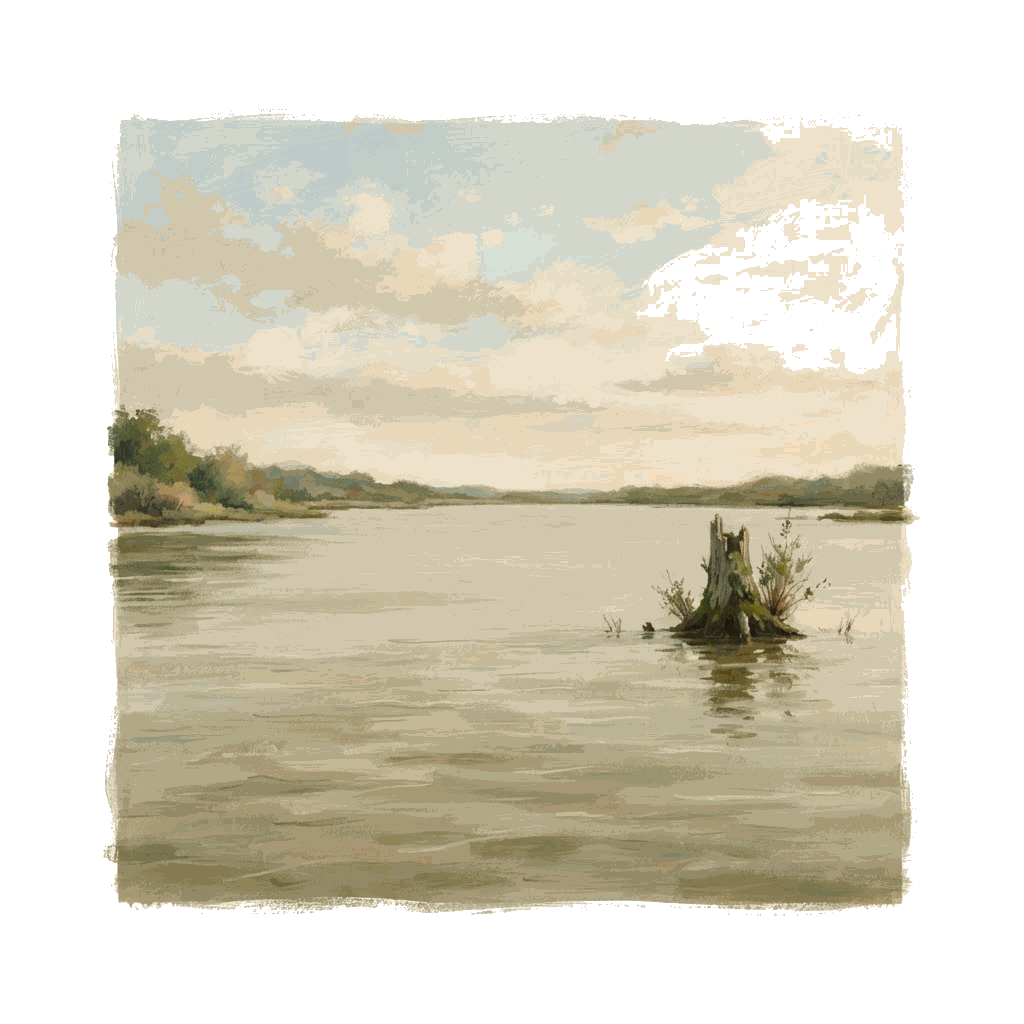
a broad, uniform shallow expanse running to a distant treeline
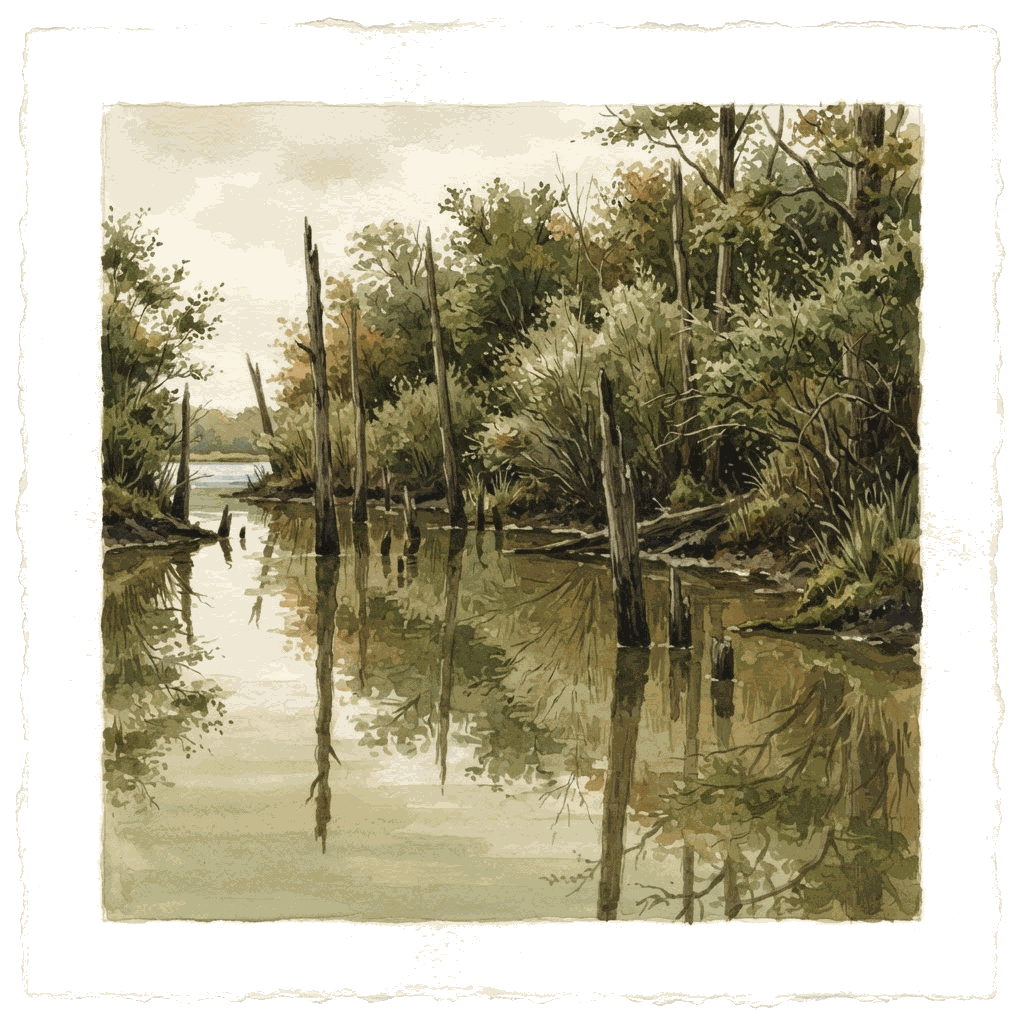
a still slack-water pocket off the main flow with log and lily edges
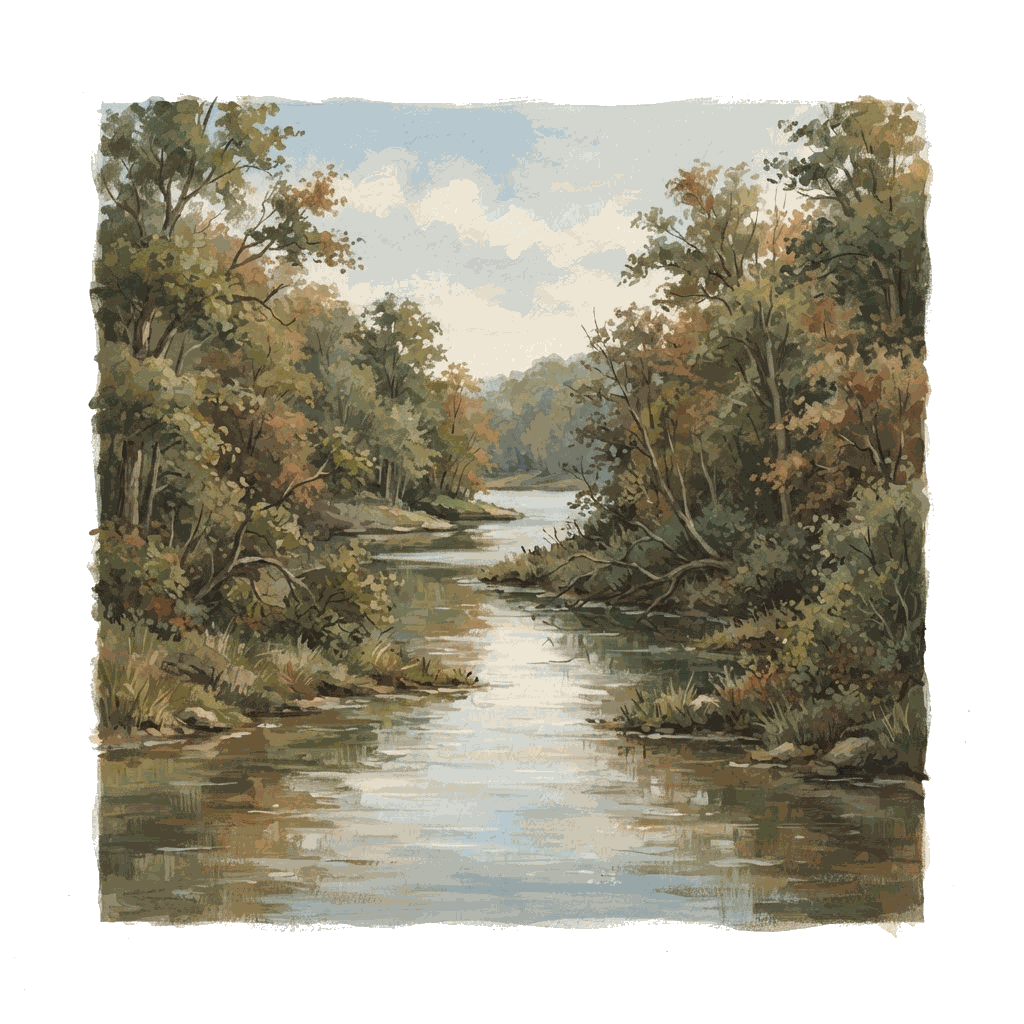
a narrow arm winding into a wooded cove, both banks closing in
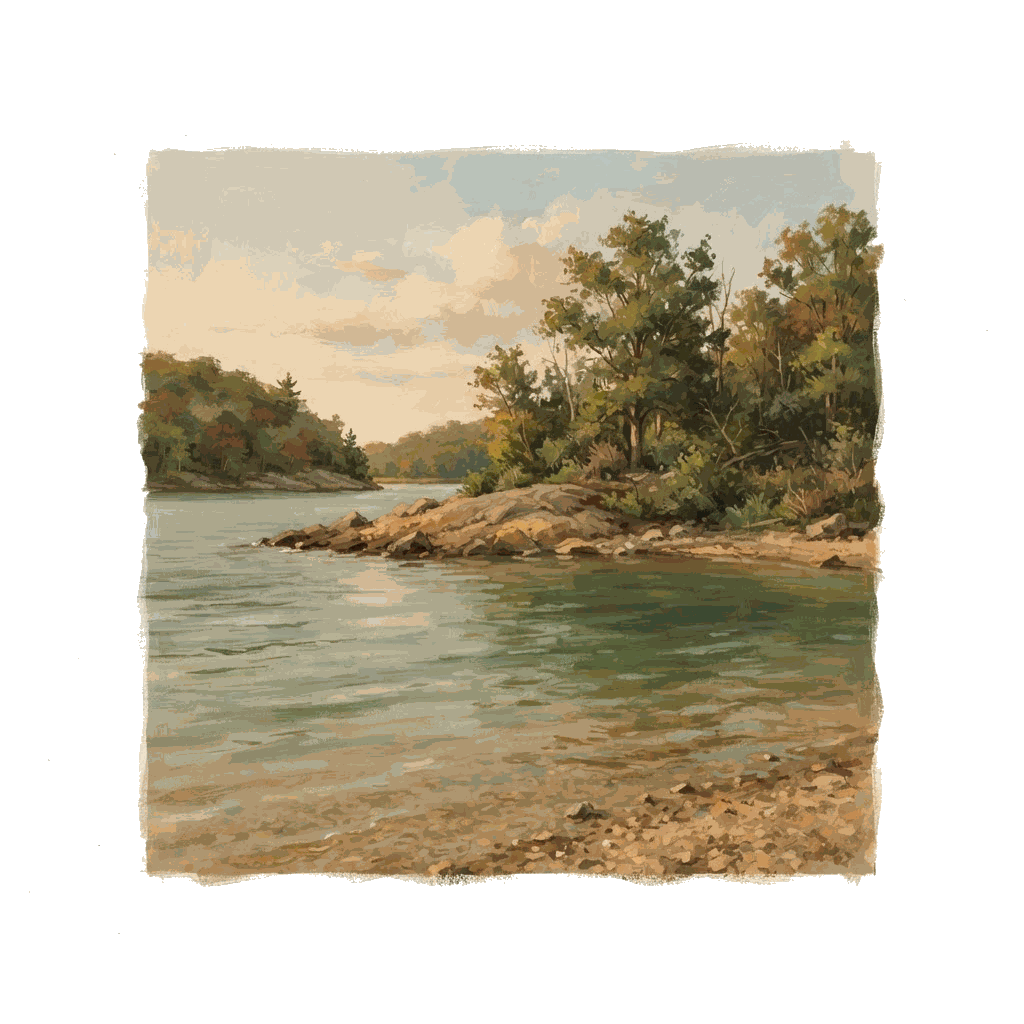
a smaller point projecting into a partly enclosed cove
What the fish are eating
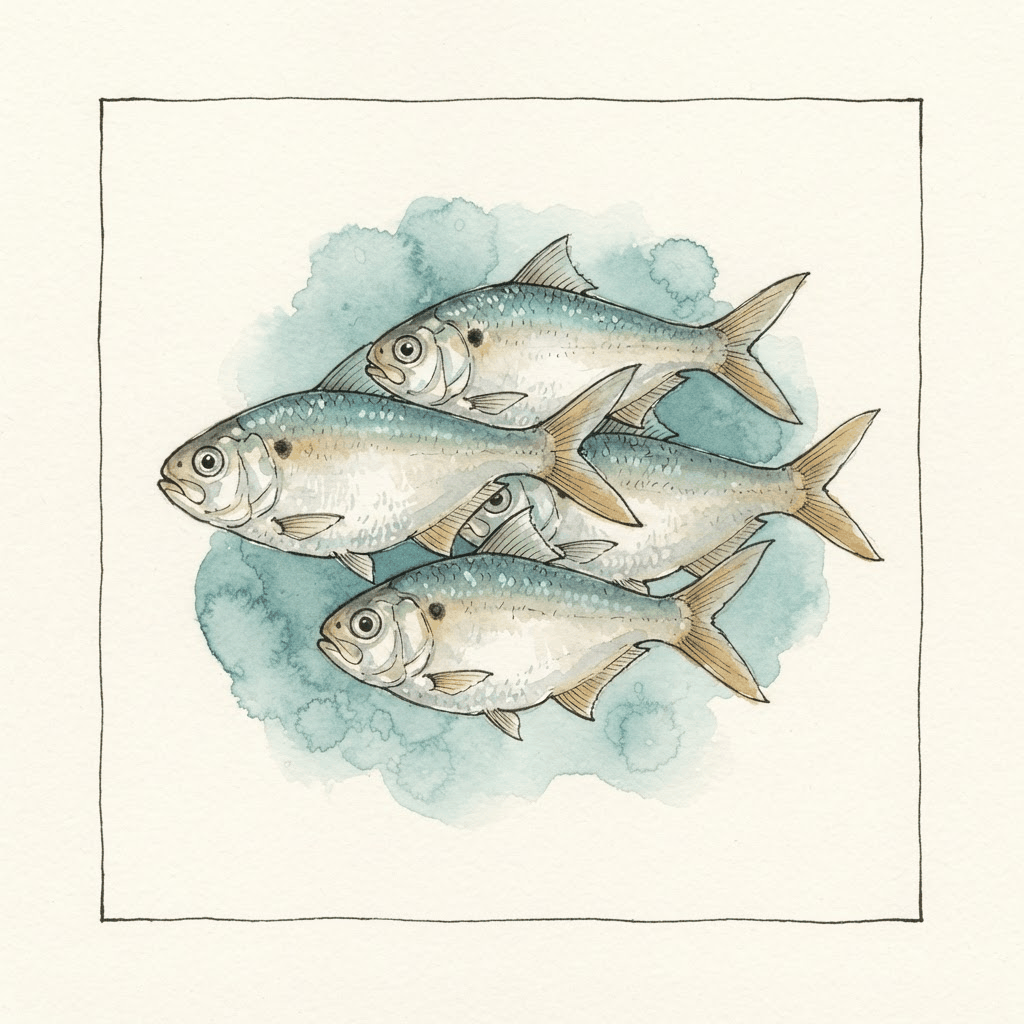
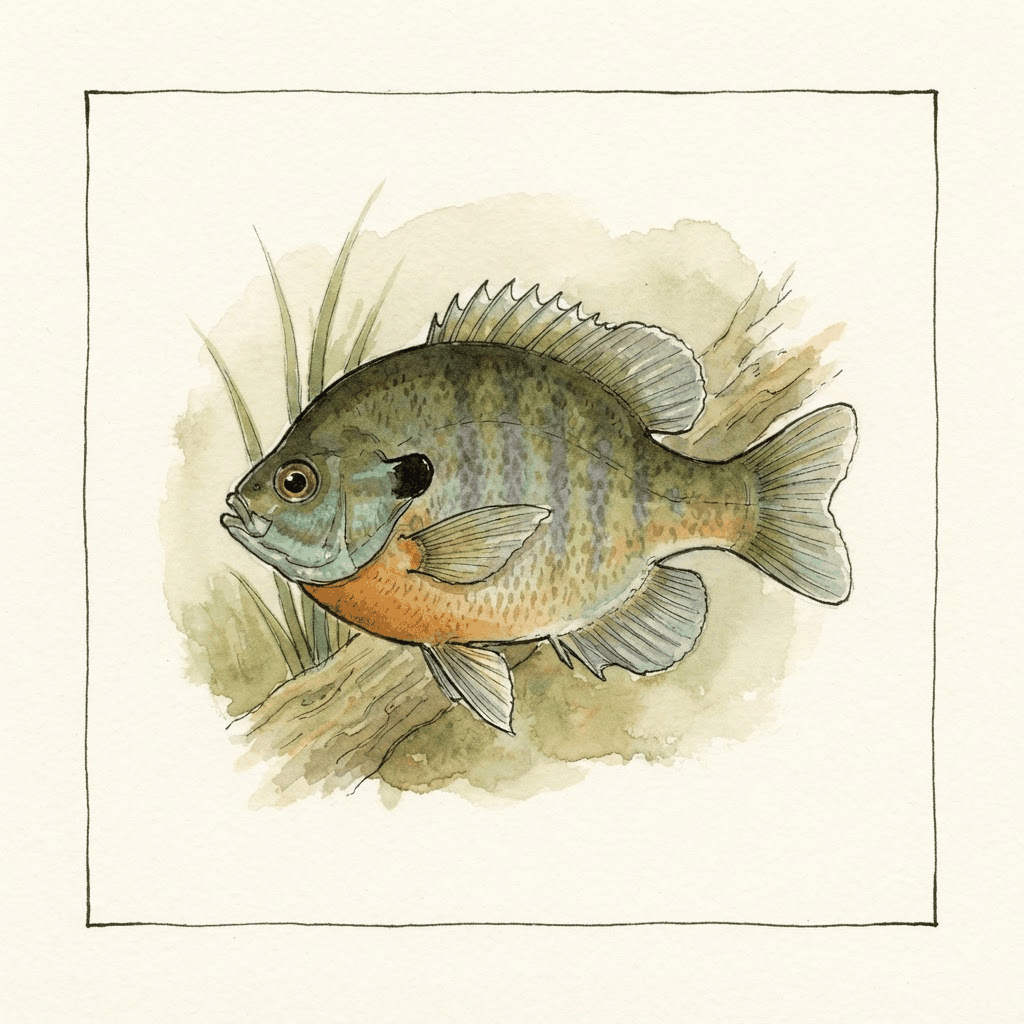
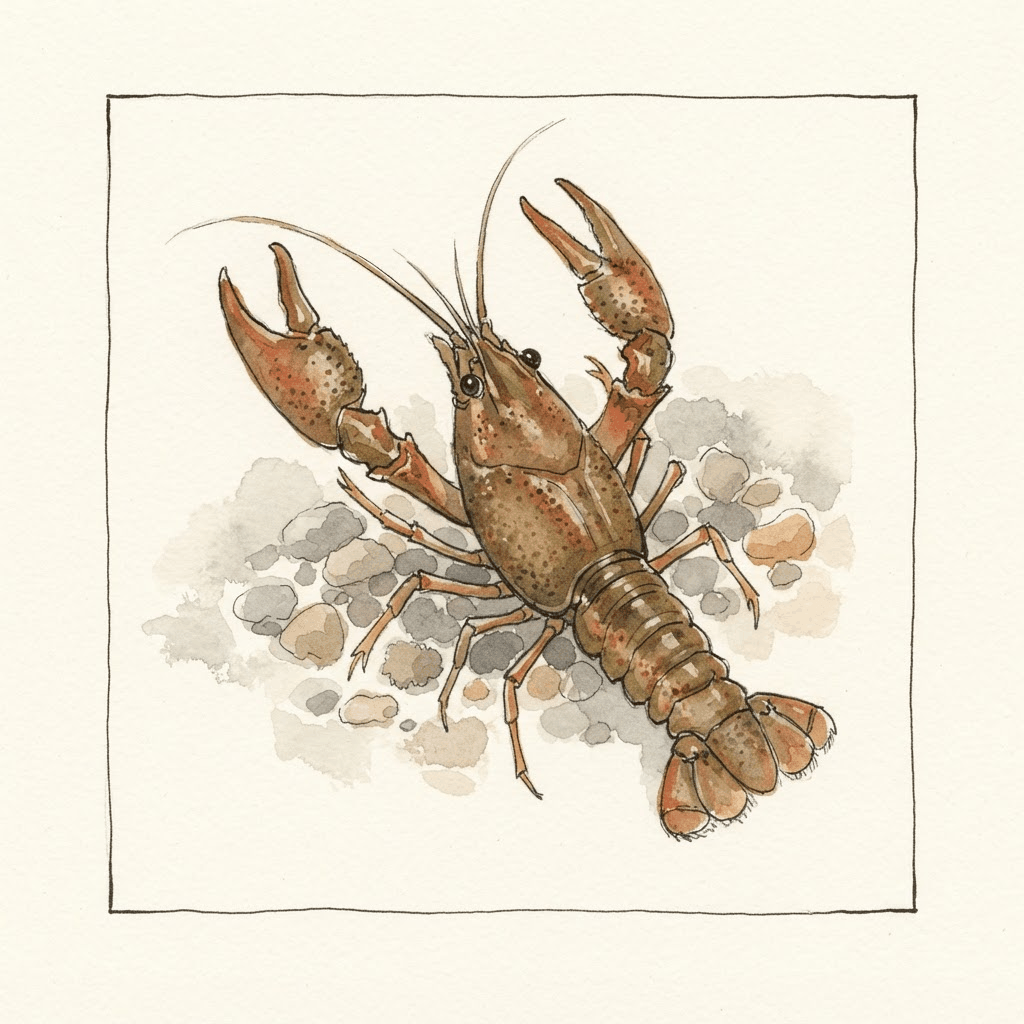
Bluegill and shad in grass and cypress. Crawfish around laydowns and old channel bends. No rock forage on this oxbow.
Where to put in
- Lake Chicot State Park
North end off Highway 257; marina with rental boats and a pier.
- Ditch Bayou Access
AGFC access; confirm ramp status before launch.
- Connerly Bayou Access
AGFC access; confirm ramp status before launch.
- Lake Village City Access
In Lake Village; confirm ramp status before launch.
Verify ramp status and access before you go.
Water level
This page is the season. Your report is the day.
Tell us your date, species and how you fish Lake Chicot. The report reads the conditions for you and adds:
- ✓The best windows to fish on your trip date, from the forecast for that day
- ✓Baits ranked for your species, the water clarity and the weather that week
- ✓Named spots to start on, with what to throw at each one
- ✓Water level, flow and wind checks pulled together in one place
- ✓A printable field card for the boat
Look inside a sample Beaver Lake report
Get Arkansas fishing notes by email
The Stringer Field Journal: what Lake Chicot and the other Arkansas waters are doing as the seasons turn, plus new lake guides. A short email, a few times a month.
Other lake and river guides
Largemouth bass · Smallmouth bass · Spotted bass · Walleye
Read the guideLargemouth bass · Smallmouth bass · Spotted bass · White bass
Read the guideLargemouth bass · Smallmouth bass · Spotted bass · Striped bass
Read the guideLargemouth bass · Spotted bass · Hybrid striped bass · White bass
Read the guideLargemouth bass · Spotted bass · White bass · Crappie
Read the guideLargemouth bass · Spotted bass · Crappie · Channel catfish
Read the guideLargemouth bass · Crappie · White bass · Channel catfish
Read the guideSmallmouth bass (14 in min, 2/day) · Goggle-eye / Ozark bass (Ambloplites constellatus — endemic to the White River drainage) · Largemouth bass (lower river) · Spotted bass (downstream of Pruitt)
Read the guideRainbow trout · Brown trout · Smallmouth bass · Walleye
Read the guideRainbow trout · Brown trout · Cutthroat trout · Walleye (Feb–Mar spawning run from Table Rock)
Read the guideRainbow trout · Brown trout · Cutthroat trout · Brook trout
Read the guideLargemouth bass · Smallmouth bass · Spotted bass · Striped bass
Read the guideLargemouth bass · Crappie · White bass · Bream
Read the guideLargemouth bass · Smallmouth bass · Spotted bass · Striped bass
Read the guideRainbow trout · Brown trout · Cutthroat trout
Read the guideLargemouth bass · Spotted bass · Striped bass · Hybrid striped bass
Read the guideRainbow trout · Brown trout · Cutthroat trout · Brook trout
Read the guideFlorida-strain largemouth bass (trophy potential) · Northern largemouth bass · Spotted bass · Crappie
Read the guide